


Gold Zakat & Sharia Compliance
Zakat on Gold Kuwait: 2026–2028 Calculation Guide

Oct
This guide explains zakat on gold Kuwait residents own during 2026–2028. It covers nisab, purity, valuation, timing, and common scholarly differences. Zakat is one of Islam’s five pillars and purifies eligible wealth. For investors and jewellery owners, an accurate calculation also requires a current gold price in Kuwaiti dinars.
Zakat on Gold Kuwait: Understanding Gold Zakat in Kuwait
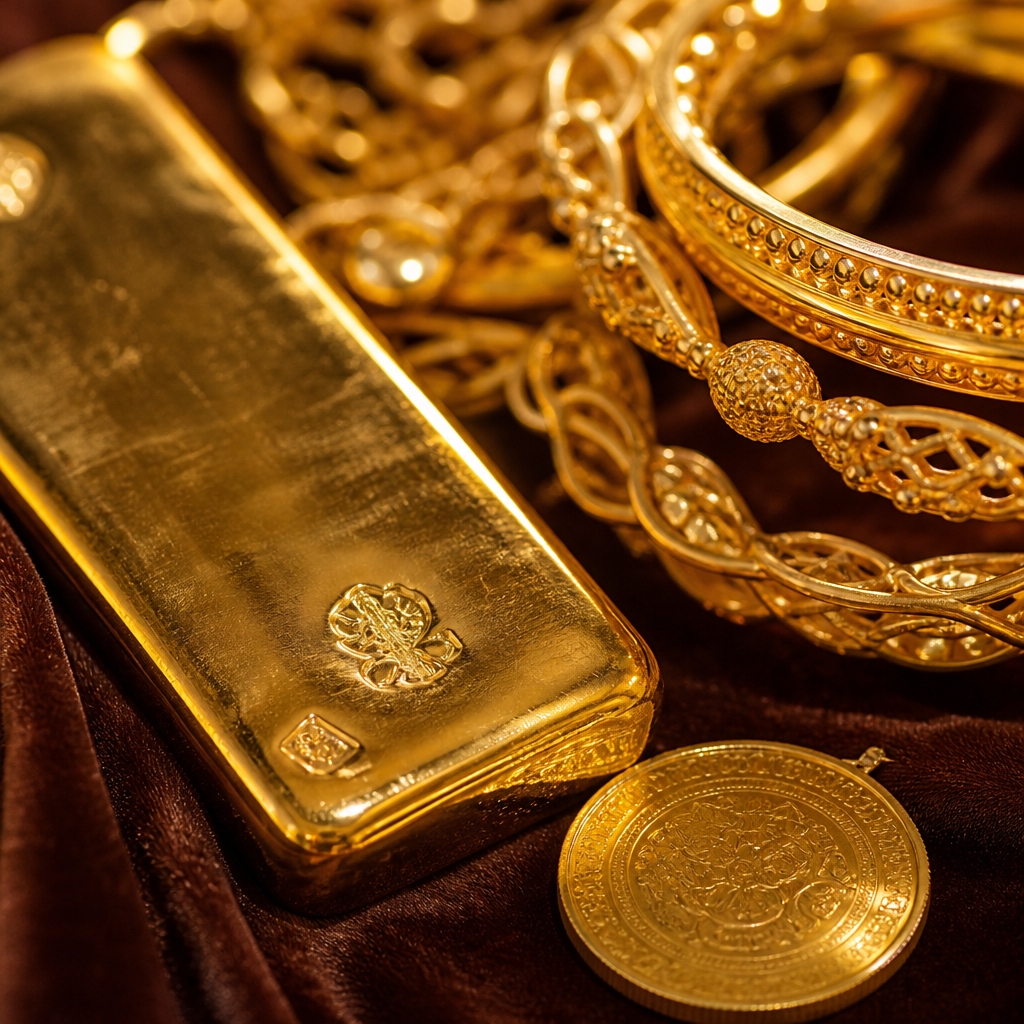
For another helpful perspective, this Zakat on Gold Kuwait highlights practical trade-offs for buyers. Gold zakat generally becomes due when eligible holdings reach the nisab and remain owned for one lunar year. The commonly used gold nisab is approximately 85 grams of pure gold. However, scholars may use slightly different weight standards. Therefore, ask a trusted local scholar or authorised zakat body when precise religious guidance is required.
The standard zakat rate is 2.5% of eligible wealth after one lunar year. This rate applies to the assessed gold value, not simply the number of jewellery pieces. Because gold prices change daily, owners should complete the valuation on their annual zakat date.
The method remains practical for 2026, 2027, and 2028. However, the KWD value will change with market prices. Therefore, review the current rate each year rather than relying on an older calculation.
Zakat on Gold Kuwait: How to Calculate Zakat on Gold
First, list every eligible gold item you own. This may include bullion bars, coins, investment gold, and jewellery covered by the ruling you follow. Next, record each item’s weight and karat purity.
- Weigh the gold: Use grams and exclude stones or non-gold components where possible.
- Confirm purity: Identify whether each item is 24K, 22K, 21K, 18K, or another fineness.
- Calculate pure-gold content: Multiply the weight by the item’s purity percentage.
- Compare with nisab: Check whether the combined eligible amount reaches the applicable threshold.
- Find the KWD value: Use a reliable gold price from your chosen zakat valuation date.
- Apply 2.5%: Multiply the eligible value by 0.025 to calculate the amount due.
For example, 21K gold is 87.5% pure. A 100-gram holding therefore contains 87.5 grams of pure gold. If all of it is eligible, the holding exceeds an 85-gram pure-gold nisab.
Suppose the eligible collection has a market value of KWD 2,500 on the zakat date. In that case, multiplying KWD 2,500 by 2.5% gives KWD 62.500. However, this example illustrates the method only. It is not a live price quotation or individual religious ruling.
Zakat on Gold Kuwait: Purity and Market Value
Purity has a direct effect on value. A gram of 24K gold contains more pure gold than a gram of 21K gold. Therefore, owners should not value mixed-purity items as though they were identical.
Before comparing different karats, you can check the live gold price and jewellery information from Sultan Gold Kuwait. When using pure-gold content, common conversion factors include 1.000 for 24K, 0.9167 for 22K, and 0.875 for 21K.
Global gold prices are usually quoted in US dollars. However, Kuwait residents normally settle zakat in KWD. Consequently, currency movements can affect the local valuation. Use the price and exchange basis applicable on your chosen annual date.
Does Personal Jewellery Require Zakat?
Islamic schools of jurisprudence differ on zakat for personal gold jewellery. Some scholars require it when the gold reaches nisab. In contrast, others may exempt jewellery used normally for personal adornment, subject to specific conditions.
Investment jewellery, excessive holdings, and items kept for resale may receive different treatment. Moreover, intention and actual use can matter. Consequently, owners should follow a recognised scholarly opinion rather than assume every item is exempt.
Gold bars and coins held as wealth are generally included in the assessment. Likewise, jewellery purchased mainly as an investment may be eligible. Therefore, keep purchase documents, weights, and purity details to support a consistent annual review.
Debts and Other Eligible Assets
Some zakat methods allow certain immediately payable debts to reduce eligible wealth. However, other approaches apply stricter conditions or do not permit the same deduction. Therefore, do not subtract long-term liabilities automatically. Instead, confirm the method with a qualified Islamic scholar.
Gold may also form part of a broader zakat assessment. For example, cash, trade inventory, silver, and other eligible assets can affect whether nisab is reached. Likewise, liabilities must be treated according to the ruling being followed.
Kuwait Gold Market Considerations
Kuwait’s local gold price reflects international market movements and the KWD exchange environment. In addition, inflation expectations, interest rates, currency strength, and geopolitical events can influence prices. As a result, two annual zakat dates may produce different KWD obligations for the same gold weight.
Retail jewellery prices may include workmanship, design, and other premiums. However, these charges do not always represent the underlying gold value. Therefore, ask whether your chosen ruling uses the metal’s resale value, pure-gold value, or another accepted basis.
Buyers should also check weight, purity, invoices, and official hallmarks. These details improve valuation accuracy and reduce uncertainty. In particular, they are useful when a collection contains several karats.
Annual Gold Zakat Checklist
- Set one lunar date: Use a consistent annual date for reviewing eligible wealth.
- Prepare an inventory: List bullion, coins, investment pieces, and relevant jewellery.
- Separate components: Exclude stones and non-gold parts where their weights are known.
- Verify karat purity: Check hallmarks, invoices, or a professional assessment.
- Check current prices: Record the KWD gold value used on the calculation date.
- Review nisab: Compare eligible holdings with the standard accepted by your religious authority.
- Calculate 2.5%: Apply the rate to the eligible value after approved adjustments.
- Keep records: Save the calculation, valuation source, and payment details for the next review.
Payment and Charitable Distribution
Zakat must reach eligible recipients under Islamic principles. The categories of recipients appear in Quran 9:60 and its accompanying translation. Accordingly, Kuwait residents may pay through an authorised zakat organisation or distribute it according to trusted scholarly guidance.
Cash payment is often practical because it gives recipients flexibility. However, the permitted payment form can depend on the scholarly method followed. Once the obligation and amount have been established, pay promptly.
Practical Guidance for 2026–2028
Do not carry a fixed KWD figure from one year into the next. Instead, repeat the valuation on each annual zakat date. In addition, keep the underlying method consistent unless reliable religious guidance changes your approach.
A clear record should show the gold weight, purity, market price, eligible value, and final 2.5% calculation. As a result, this process supports accuracy and responsible wealth management. It also makes future annual reviews faster.
Disclaimer: This publication provides educational and market information only. It does not constitute formal financial advice or an individual Islamic ruling. Therefore, consult a qualified scholar for guidance about personal jewellery, debts, nisab, and other circumstances.