



أخبار سوق الذهب وتحليلات مباشرة
Gold Prices Ease as South Africa Warns of Inflation Risks
مواطن
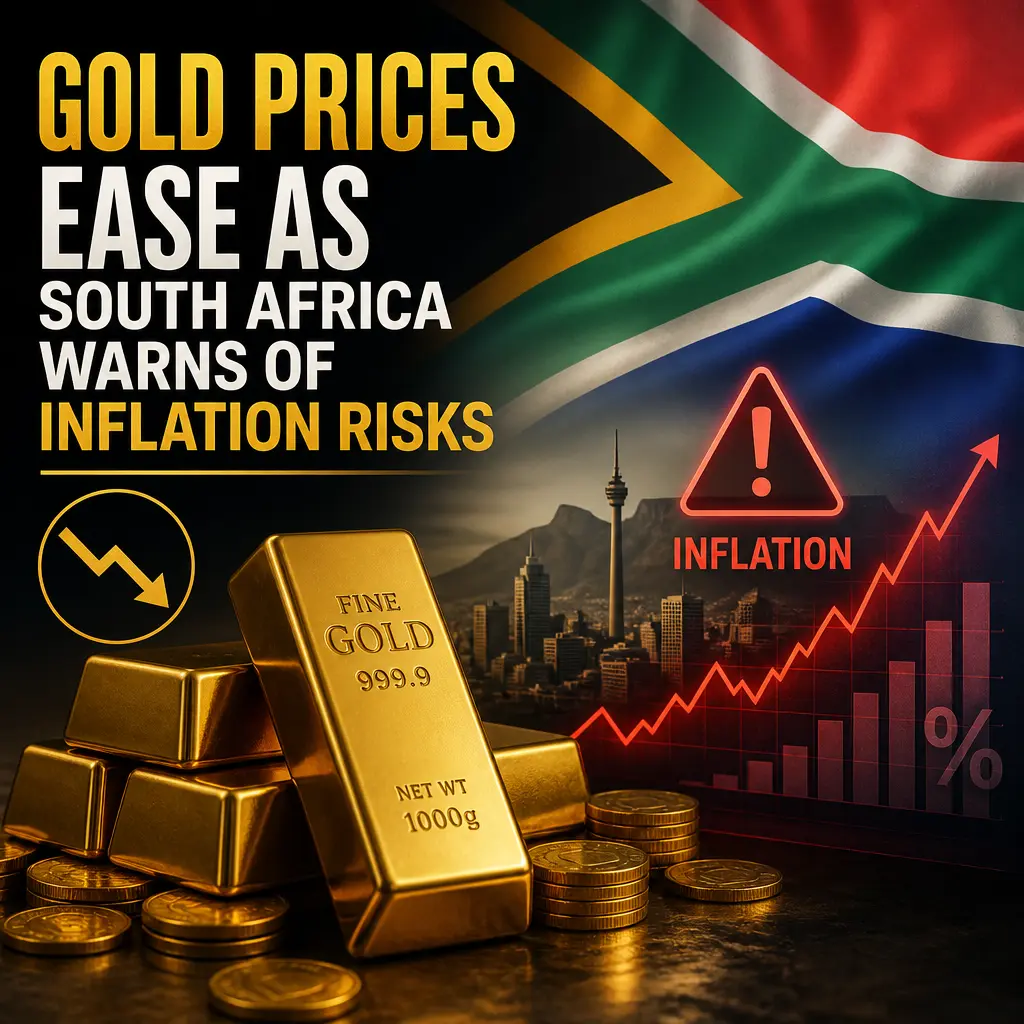
Gold prices eased as investors weighed renewed inflation concerns against shifting expectations for global interest rates. Meanwhile, South African Reserve Bank Governor Lesetja Kganyago warned that inflation risks remain tilted to the upside. As a result, some investors reduced exposure to non-yielding bullion.
For another helpful perspective, this Gold Prices Ease highlights practical trade-offs for buyers. Reuters reported on Kganyago’s warning about upside inflation risks. In addition, the assessment adds to a wider debate about how long central banks may keep rates restrictive.
Gold Prices Ease: Market Overview
For another helpful perspective, this Gold Prices Ease highlights practical trade-offs for buyers. Spot gold, quoted as XAU/USD, moved lower as traders reassessed the timing of future monetary-policy easing. However, the decline does not necessarily end the long-term bullish case for gold. Instead, it reflects a familiar short-term tension.
For another helpful perspective, this Gold Prices Ease highlights practical trade-offs for buyers. Inflation can support demand for a store of value. At the same time, persistent inflation can delay rate cuts and lift bond yields. Consequently, those conditions increase the opportunity cost of holding gold because bullion pays no interest or dividend.
Gold’s reaction also reflected movements in the US dollar and Treasury yields. For example, a stronger dollar makes gold more expensive for buyers using other currencies. Moreover, higher real yields can have an even greater effect. They improve the relative appeal of cash and government bonds.
Gold Prices Ease: Key Catalysts and Drivers
Gold Prices Ease: Inflation risks complicate the rate outlook
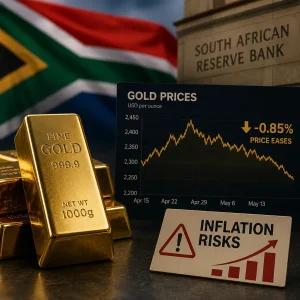
Kganyago’s warning matters beyond South Africa. In fact, it reflects a concern shared by many central banks. Inflation may return to target more slowly than financial markets expect.
Energy costs, food prices, wages, services, currency weakness, and supply disruptions can all revive price pressures. Even when headline inflation falls, however, stubborn services inflation can keep policymakers cautious.
For gold traders, the policy response remains crucial. If policymakers signal that rates must stay high, bond yields may rise. As a result, bullion can face immediate pressure.
However, inflation can remain elevated while economic growth weakens. That combination may increase demand for gold. During such periods, investors often seek protection against declining purchasing power and policy uncertainty.
Federal Reserve expectations remain decisive
The Federal Reserve remains the most influential central bank for the international gold market. In particular, expectations for US rate cuts affect the dollar and Treasury yields. The pace of balance-sheet reduction also matters.
Markets that price fewer rate cuts generally support the dollar. Therefore, they can also weigh on gold. By contrast, expectations for an easier Federal Reserve usually create a more supportive environment for bullion.
Investors should separate nominal rates from real yields. Real yields account for inflation expectations. Gold often performs best when real yields fall. This pattern can emerge when growth loses momentum or central banks tolerate higher inflation.
Consequently, a renewed rise in real yields would create a significant headwind for XAU/USD. Conversely, a decline could help prices recover.
Dollar fluctuations amplify price movements
The dollar remains a critical short-term catalyst. A stronger US currency can pressure gold even when physical demand stays healthy. Meanwhile, currency moves reflect economic growth, interest-rate differences, fiscal policy, and safe-haven flows.
Gold can decline in dollar terms while remaining stable or rising in other currencies. This distinction matters, therefore, for international investors.
A buyer in a Gulf market often sees movements that closely track the global dollar price. The Kuwaiti dinar has a substantial dollar component. Nevertheless, local premiums, dealer margins, fabrication costs, and taxes can still change the final retail rate.
Central-bank buying provides structural support
Official-sector demand remains a strong long-term support for gold. Central banks have increased bullion holdings as they diversify reserves. They also seek less dependence on any single currency.
For more context, read this guide to central-bank gold demand and de-dollarization.
Central-bank demand tends to respond less to daily yield changes than speculative futures positioning. As a result, it can limit the depth of corrections when short-term traders sell contracts.
Still, central-bank purchases do not remove volatility. Gold can experience sharp declines when leveraged investors unwind positions.
Geopolitical uncertainty remains in the background
Geopolitical tensions, trade disputes, conflict risks, and sovereign-debt concerns can support safe-haven demand. In turn, these forces may offset the effect of rising yields.
During acute uncertainty, investors may buy gold even when the dollar and interest rates rise. As a result, the market remains vulnerable to abrupt moves in both directions.
Regional Impact and Kuwait Market Outlook
International gold prices provide the main starting point for local prices in Kuwait. The Kuwaiti dinar operates against a currency basket with a substantial dollar component. Therefore, changes in XAU/USD usually pass through to local bullion rates with limited currency distortion.
A decline in international spot gold generally puts downward pressure on Kuwait’s quoted prices for 24-karat, 22-karat, and 21-karat gold.
How local karat prices respond
ذهب عيار 24 offers the closest retail representation of international bullion prices. It contains the highest proportion of pure gold. Investors often choose it for bars, coins, or high-purity jewelry.
ذهب عيار 22 قيراطًا is widely used in jewelry. It contains less gold than 24K. However, its price usually follows the same international direction, while workmanship, design, retailer margins, and other charges affect the final cost.
ذهب عيار 21 also remains common in regional jewelry markets. It usually follows the broad movement in 24K gold. Its price per gram is lower because it contains less pure gold.
Retail buyers should focus on the total purchase price. In practice, a fall in spot gold may not produce an equal fall in the price of finished jewelry.
Practical considerations for Kuwait buyers
Prices can differ between bullion dealers and jewelry shops. Therefore, buyers should compare the quoted per-gram rate with the total premium. They should also check fabrication fees, assay or certification charges, and the potential resale spread.
Jewelry may carry substantial workmanship costs. Sellers may not recover those costs later. By contrast, recognized bars and coins usually provide more direct exposure to gold than elaborate jewelry.
Short-term weakness may benefit buyers who accumulate gradually. However, identifying the exact market bottom remains difficult. A disciplined strategy divides purchases into several tranches.
Staged buying reduces the risk of committing all capital before another decline. It also allows investors to participate if prices rebound.
Gulf investors should monitor regional inflation, energy prices, local liquidity, and seasonal demand. For example, wedding and festival seasons can increase physical buying. Strong demand may support retail premiums when international prices fall.
Key Takeaways for Investors
- Higher-for-longer rates pose a near-term risk: Persistent inflation could delay rate cuts and lift real yields.
- Watch the dollar and Treasury yields: A stronger dollar or rising real yields would usually pressure XAU/USD.
- Structural demand remains important: Central-bank purchases and geopolitical uncertainty support the longer-term market.
- Use staged buying for physical accumulation: Several purchase levels can reduce timing risk.
- Separate investment gold from jewelry: Compare purity, premiums, workmanship, certification, and resale conditions.
Expert Conclusion
Gold’s retreat after South Africa’s inflation warning shows the market’s current balancing act. Inflation can increase bullion’s appeal as a store of value. Nevertheless, the policy response can also weigh on gold when it produces higher real rates and a stronger dollar.
Traders will likely assess whether Kganyago’s warning forms part of a wider pattern. They will also watch US inflation data, employment indicators, and Federal Reserve communications.
Meanwhile, Treasury real yields and the dollar index will remain important signals. Central-bank buying and geopolitical developments may also determine whether weakness represents a temporary correction or a broader trend.
For wealth holders in Kuwait and the wider Gulf, a measured strategy remains practical. Gold can hedge against currency, inflation, and systemic risk. However, buyers should still consider price, purity, liquidity, and holding costs.
Near-term volatility may continue. Yet official-sector demand, uncertain monetary policy, and geopolitical risk should continue to support strategic demand for physical gold.