



أخبار سوق الذهب وتحليلات مباشرة
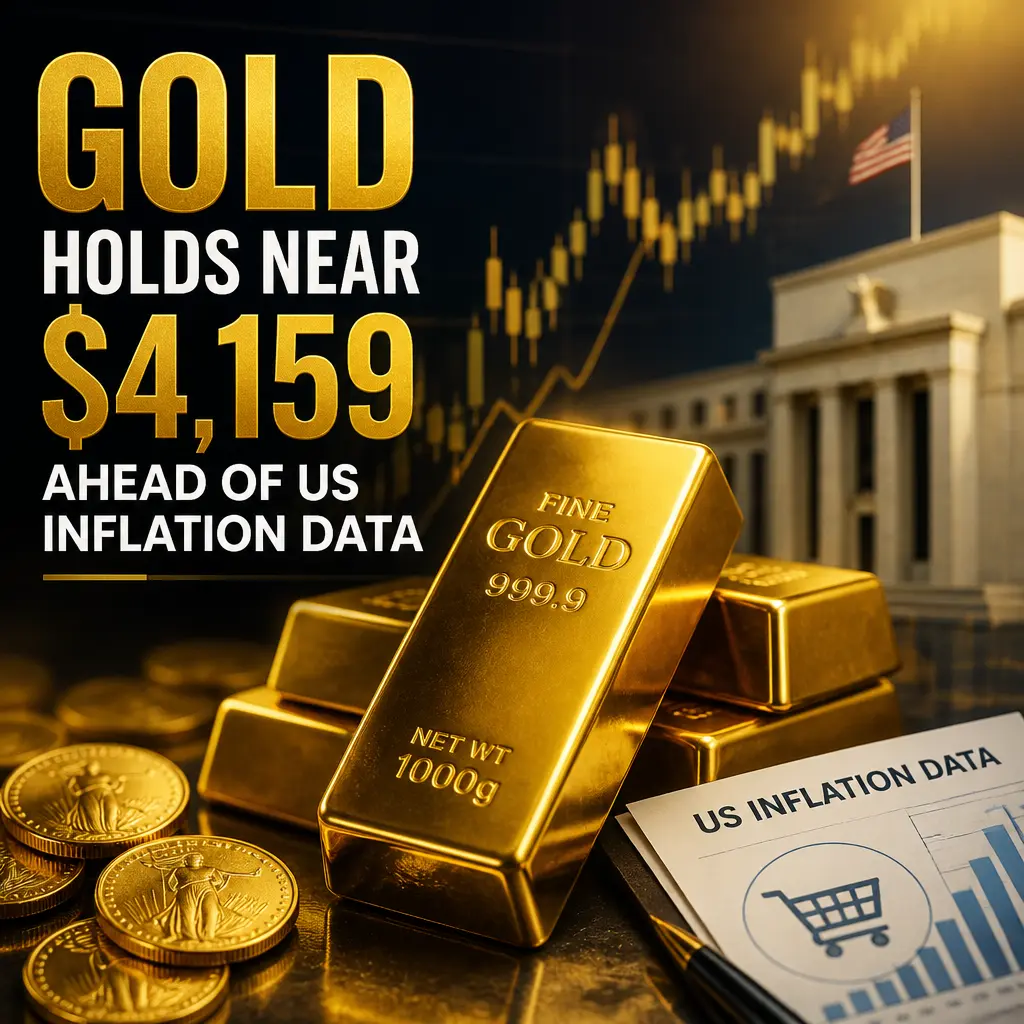
استقر سعر الذهب قرب 4159 دولارًا قبل صدور بيانات التضخم الأمريكية.
مواطن
Market Overview
Gold prices held near $4,159 an ounce as traders positioned cautiously ahead of the latest US inflation data, a release capable of reshaping expectations for Federal Reserve interest-rate policy and the broader direction of financial markets. The metal’s stability signals a temporary balance between strong demand for defensive assets and the pressure created by elevated bond yields and uncertainty over the timing of future monetary easing.
Spot gold, quoted as XAU/USD, remained close to its recent high range rather than extending its advance aggressively. Investors appeared reluctant to build large new positions before the inflation figures, particularly because even a modest surprise in consumer-price data could trigger sharp moves in the US dollar, Treasury yields and precious metals. Gold does not pay interest, so its relative appeal generally rises when real yields fall and declines when investors expect rates to remain restrictive.
The market’s concentration on inflation reflects gold’s position at the intersection of monetary policy, currency valuation and risk management. A softer-than-expected report could reinforce expectations that the Federal Reserve has room to reduce borrowing costs, potentially weakening the dollar and supporting bullion. Conversely, persistent price pressures may encourage policymakers to keep rates higher for longer, creating a short-term headwind for gold despite ongoing demand for protection against economic and geopolitical risks.
Key Catalysts and Drivers
US inflation and Federal Reserve policy
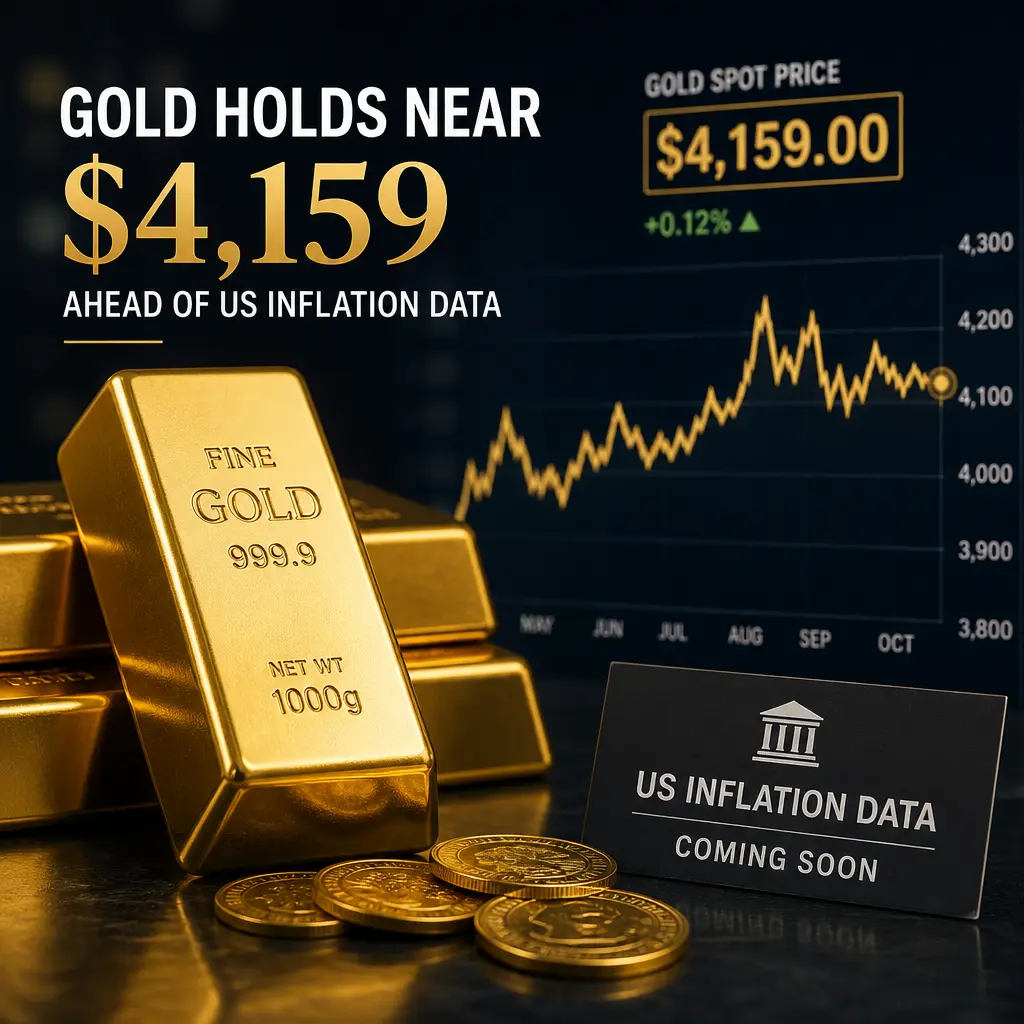
The immediate catalyst is the US inflation release. Markets are not focused solely on the headline consumer-price number; core inflation, which excludes food and energy, will be especially important because it provides a clearer indication of underlying price pressures. Monthly changes may also matter more than the annual rate if traders believe the inflation trend is turning.
A benign report would likely reduce expectations for additional tightening and could revive speculation about interest-rate cuts. Lower expected policy rates tend to reduce Treasury yields and the opportunity cost of holding bullion. Gold can therefore benefit even when the inflation result is not dramatically weak, provided it causes markets to reassess the likely path of real interest rates.
A hotter reading would have the opposite effect. Rising yields and a stronger dollar could prompt traders to take profits in gold, particularly after the metal’s substantial appreciation. However, a negative reaction may be limited if investors interpret persistent inflation as a reason to maintain exposure to assets that can preserve purchasing power over the longer term.
The US dollar and Treasury yields
Because international gold is priced in dollars, movements in the US Dollar Index are central to the metal’s daily performance. A weaker dollar makes bullion less expensive for buyers using other currencies and often supports investment demand. A stronger dollar can weigh on XAU/USD, although that relationship is not constant during periods of financial stress.
US Treasury yields are equally important. When yields rise, investors have a greater incentive to hold interest-bearing assets instead of non-yielding gold. The most relevant measure is the real yield—nominal yields adjusted for inflation expectations—because it captures the return available after accounting for changes in purchasing power.
Gold’s ability to remain near $4,159 despite the market’s sensitivity to yields suggests that underlying demand remains substantial. It also indicates that traders may already be pricing in some degree of policy uncertainty, reducing the likelihood that one data release will determine the entire medium-term trend.
Central-bank and institutional demand
Official-sector buying has become an important structural support for the bullion market. Central banks have increased their gold holdings in recent years as part of efforts to diversify reserves, reduce reliance on the dollar and strengthen balance-sheet resilience during periods of geopolitical tension.
This demand differs from short-term futures trading because it is often strategic and less sensitive to daily price fluctuations. Continued purchases can help absorb supply and provide a floor under the market during corrections. Investment funds, pension managers and private wealth advisers have also shown greater interest in gold as a portfolio diversifier, particularly when equities, bonds and currencies are exposed to the same macroeconomic risks.
Geopolitical and fiscal uncertainty
Geopolitical tensions, concerns about sovereign debt and uncertainty over global economic growth continue to reinforce gold’s safe-haven role. Although these factors may not produce an immediate price increase, they can discourage investors from aggressively selling during pullbacks.
Fiscal developments are also relevant. High government borrowing requirements may keep bond yields elevated, but concerns about debt sustainability can simultaneously encourage demand for hard assets. This creates a complex environment in which gold may respond positively to both falling yields and episodes of market anxiety, even though the short-term price reaction can be volatile.
Regional Impact and Kuwait Market Outlook
Gold’s international price is the primary driver of bullion rates in Kuwait and across the Gulf, but local retail prices also reflect the US dollar exchange rate, dealer premiums, fabrication costs, taxes where applicable and the spread between buying and selling prices. Since Gulf currencies are generally closely linked to the US dollar, local gold prices tend to track global XAU/USD movements relatively directly.
For Kuwait-based investors, a sustained move above the $4,159 area would normally feed through to higher quoted prices for 24-karat bullion. The effect may be visible first in bars and investment coins, where pricing is closely tied to the international spot market. Jewelry prices often adjust more gradually because they include workmanship, design charges and retailer margins.
How different gold purities respond
24K gold: This is the closest retail representation of international bullion, with prices primarily determined by the global spot rate and the dollar-to-dinar relationship. It is generally the preferred form for investors focused on wealth preservation and low fabrication costs.
22K gold: Commonly used in traditional jewelry, 22K prices follow the same international direction but include manufacturing and retail premiums. Buyers should distinguish the underlying metal value from the craftsmanship charge, particularly when comparing products across retailers.
21K gold: This category is widely traded in Gulf jewelry markets and usually moves in line with 24K and 22K prices after adjusting for its lower gold content. Its resale value depends not only on the metal price but also on the dealer’s assessment of workmanship and buyback terms.
For jewelry buyers, price volatility creates a difficult timing decision. Purchasing before a strong upward move may protect against higher replacement costs, but buying during a temporary spike can expose consumers to a sharp correction. Those buying for weddings or other fixed dates may benefit from staged purchases rather than attempting to identify a precise market bottom.
Investors in Kuwait should also compare the total acquisition cost. A bar with a narrow premium and clear purity certification may be more efficient for investment than a highly decorated jewelry item, whose resale value can exclude much of the original workmanship charge. Secure storage, dealer reputation and transparent buyback policies are equally important.
Key Takeaways for Investors
- Inflation is the immediate risk event: A softer US inflation reading could pressure the dollar and yields while supporting gold; a hotter result may trigger short-term profit-taking.
- Do not rely on a single price level: Gold near $4,159 remains vulnerable to volatility, so investors should evaluate position size, time horizon and portfolio exposure rather than chase momentum.
- Physical accumulation works best in stages: Regular purchases can reduce the risk of committing all capital immediately before a correction.
- Purity and premiums matter: Kuwait buyers should compare 24K, 22K and 21K prices on a metal-content basis and separate manufacturing charges from bullion value.
- Gold remains a diversifier, not a guaranteed one-way trade: Central-bank demand and geopolitical risks support the long-term case, but interest rates, the dollar and investor positioning can produce significant drawdowns.
Expert Conclusion
Gold’s ability to remain near $4,159 before the US inflation data reflects a market waiting for confirmation rather than a lack of conviction. The next decisive move is likely to depend on how the inflation report changes expectations for Federal Reserve policy, real Treasury yields and the US dollar. A softer inflation profile could open the way for renewed upside, while a stronger report may bring a correction as leveraged positions are reduced.
Even so, the broader investment case is supported by factors that extend beyond the next data release. Central-bank accumulation, currency diversification, geopolitical uncertainty and concerns over fiscal stability can continue to underpin demand for bullion. For private wealth holders in Kuwait and the wider Gulf, the most prudent approach is to treat gold as a long-term store of value, maintain disciplined purchase levels and pay close attention to local premiums and resale conditions.
In the coming sessions, traders should monitor the inflation details rather than the headline figure alone, followed by US yield movements, Federal Reserve commentary and changes in futures positioning. A sustained breakout will require confirmation from weaker real yields or stronger physical demand. Until then, gold is likely to remain highly sensitive to macroeconomic headlines, with volatility offering both risk and opportunity for carefully managed investors.