



Gold Market News & Live Analysis
Gold Price Rebound After Hot U.S. Inflation
Oct
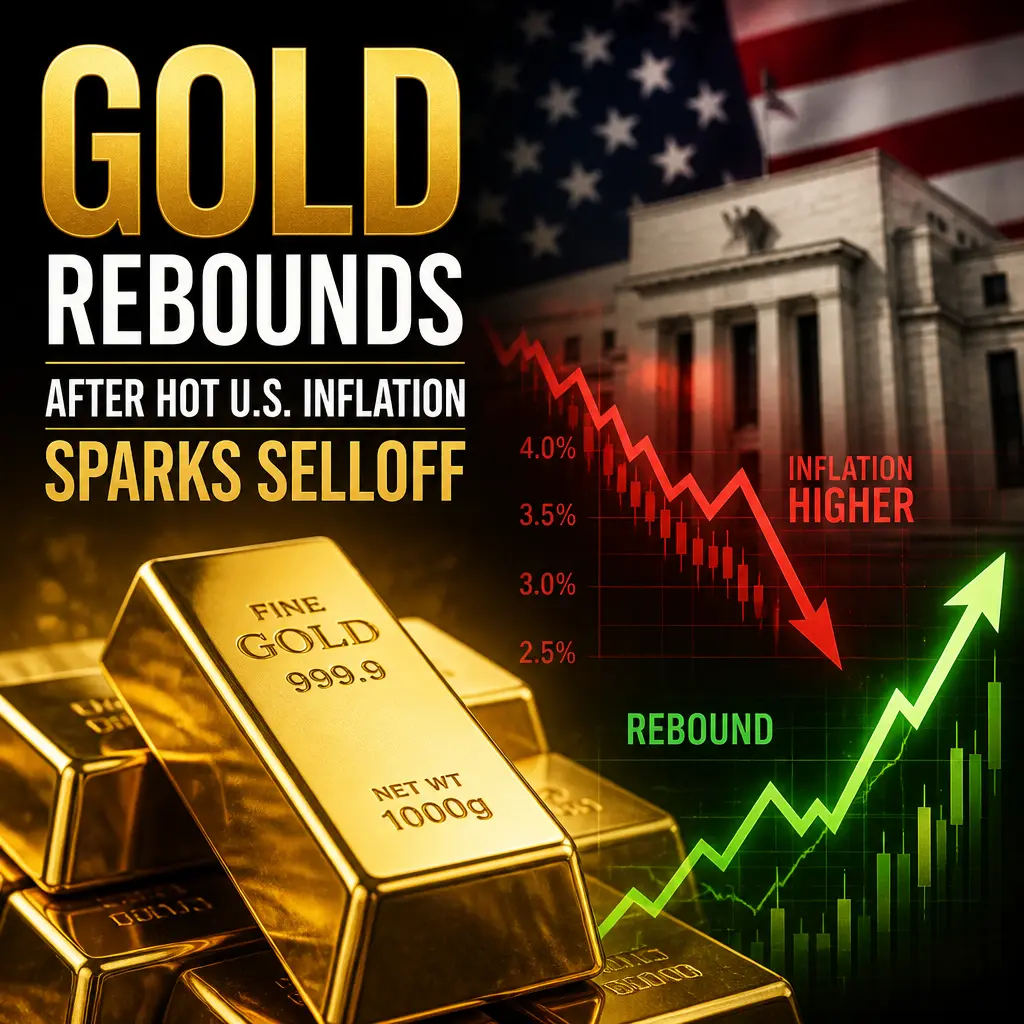
The gold price rebound followed an abrupt selloff after U.S. inflation exceeded market expectations. Meanwhile, spot gold, quoted as XAU/USD, fell as traders priced in higher interest rates. As a result, rising Treasury yields and a stronger dollar reduced gold’s appeal. However, buyers then returned at lower prices. Market coverage of the inflation-driven move shows how quickly sentiment changed.
Nevertheless, the rebound did not erase the selloff. Instead, it showed that buyers still wanted bullion during weakness. Therefore, traders must now decide whether the inflation surprise will delay rate cuts briefly or trigger a broader policy repricing.
Key Catalysts Behind the Gold Price Rebound
Gold Price Rebound: Hotter inflation changes the Federal Reserve outlook
The main catalyst was a U.S. inflation reading above forecasts. Consequently, investors often view stronger consumer-price data as a reason for the Federal Reserve to delay rate cuts.
Gold pays no interest or dividends. Therefore, its opportunity cost rises when cash and government bonds offer higher yields. In turn, delayed rate-cut expectations can lift Treasury yields and the dollar. Both moves can pressure dollar-denominated bullion.
The reaction can become sharp when investors already expect lower rates. For example, some traders reduce gold exposure. In addition, algorithmic strategies respond to changes in yields, currency levels and technical support. As a result, these actions can drive a rapid decline, even when gold’s long-term case remains intact.
Gold Price Rebound: Dollar and Treasury yields remain central
The U.S. Dollar Index remains a key influence on global gold prices. Specifically, a stronger dollar makes bullion more expensive for buyers using other currencies. It can also reduce demand in futures and over-the-counter markets.
Conversely, a weaker dollar can support XAU/USD, even without a major change in physical demand. Treasury yields matter as well. If yields keep rising, gold may face more pressure. However, if yields reverse, bullion could find support.
Investors will watch more than the inflation headline. They will also track core inflation, labor-market data and Federal Reserve commentary.
Safe-haven demand limits downside
Gold’s rebound also reflected demand beyond interest-rate trading. In recent years, central banks have diversified their reserves. Consequently, their purchases provide an important source of structural support. This demand often reflects reserve management, currency diversification and geopolitical concerns.
Moreover, political tensions, trade disputes and fiscal uncertainty can encourage precious-metal ownership. These factors may not prevent short-term declines. However, they can create a floor by sustaining institutional and physical demand. For more context, see our analysis of central bank gold demand and de-dollarization.
Technical positioning and bargain hunting
After a sharp drop, technical traders often seek support near previous lows or moving averages. Meanwhile, short sellers may close positions after prices fall. Long-term investors may also build holdings gradually.
Together, these actions can produce a rebound while the original catalyst remains negative. Even so, investors should act carefully. A one-session bounce does not prove that the inflation-driven selloff has ended.
A stronger recovery would need evidence that yields and the dollar have peaked. It would also need enough physical and investment demand to absorb futures-market selling.
Regional Impact and Kuwait Market Outlook
Gold prices in Kuwait and across the Gulf usually respond to international bullion prices and the U.S. dollar. Kuwait manages the dinar against a currency basket with a significant dollar component. As a result, local retail prices may not match every XAU/USD move.
In addition, currency adjustments, dealer margins and inventory costs affect local quotations. Still, a major global decline or rebound usually reaches local bullion and jewelry prices.
How local rates may respond
For Kuwait investors, 24-karat gold offers the clearest exposure to international bullion. It contains the highest gold content and commonly appears in bars, coins and investment products.
Therefore, a spot-gold rebound will likely lift 24K quotations. Conversely, a renewed XAU/USD decline would normally reduce them, subject to local premiums.
Jewelry buyers often choose 22K and 21K products. Their prices reflect gold content, workmanship, design charges and retailer margins. Taxes or other transaction costs may also apply.
Consequently, jewelry prices may fall more slowly than international gold prices. Making charges can also reduce the value recovered during resale.
In practical terms, 24K bars and widely traded coins provide more transparent bullion exposure. By contrast, buyers of 22K or 21K jewelry should separate metal value from craftsmanship costs.
Implications for Gulf investors
Local demand patterns also matter. For instance, gold buying often rises during weddings, religious festivals, seasonal travel and periods of strong household income. Physical demand can remain firm while international futures prices fluctuate.
Investors should compare the retail quote with the global benchmark, exchange rate and dealer premium. In particular, large differences between sellers can materially affect returns. This matters especially for small bars and jewelry.
Before a purchase, buyers should verify purity, request a detailed invoice and review the dealer’s buyback policy. These steps can improve transparency.
Given this environment, staged accumulation may suit investors better than an all-at-once decision. A long-term buyer can divide an intended allocation into several purchases. This approach reduces the risk of buying at a short-term peak.
Those buying jewelry for immediate use should prioritize design, quality and total cost. For that purpose, predicting every daily price move is less important.
Key Takeaways for Investors
- Track real yields: Gold responds strongly to inflation-adjusted bond yields. Hot inflation can hurt bullion when it pushes real yields higher.
- Watch the dollar and Fed guidance: A stronger dollar and delayed rate cuts could remain headwinds. However, softer data or dovish commentary could support XAU/USD.
- Use staggered purchases: Buying in several installments can reduce timing risk for investors building physical holdings.
- Separate bullion from jewelry costs: Bars and coins offer clearer gold exposure. By contrast, jewelry includes workmanship and premiums that may not return at resale.
- Maintain diversification: Gold can help preserve purchasing power and hedge risk. Nevertheless, it should complement cash, fixed income and other long-term assets.
Expert Conclusion
The gold price rebound highlights a market caught between higher-for-longer rates and strong demand for defensive assets. Ultimately, XAU/USD will depend heavily on the next moves in U.S. yields and the dollar.
Traders should monitor economic data, Federal Reserve speeches, Treasury volatility and futures positioning. Meanwhile, sticky inflation could keep pressure on gold if it delays rate cuts.
However, weaker labor or growth data could produce the opposite result. Falling yields, renewed geopolitical tension and continued central-bank purchases could strengthen the rebound.
For wealth holders in Kuwait and the wider Gulf, allocation, liquidity and total transaction costs matter more than every intraday move. Gold remains vulnerable to policy shocks. Even so, buyers who return after sharp declines show that strategic demand remains present.
Overall, a disciplined, diversified and staged approach suits the current market better than aggressive speculation or complete avoidance of volatility.