



Gold Market News & Live Analysis
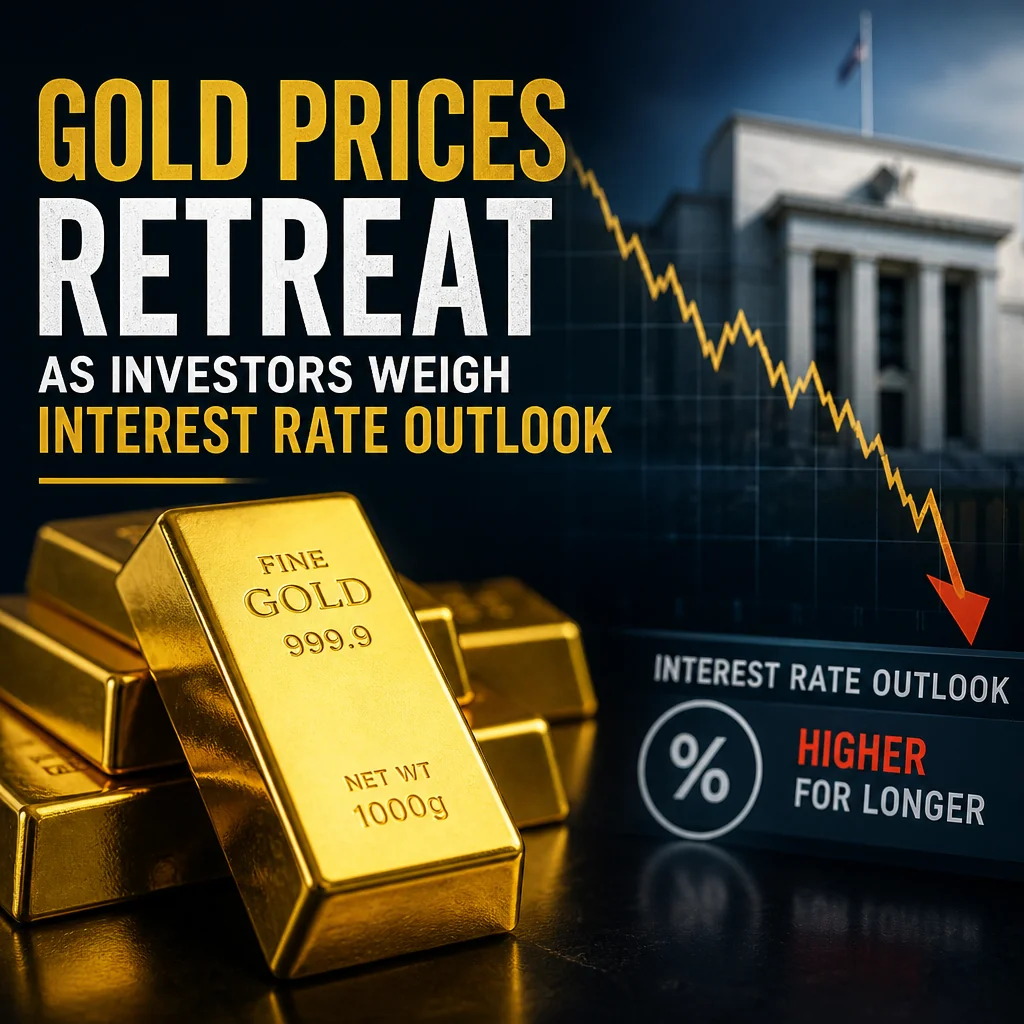
Gold Prices Retreat as Investors Weigh Interest Rate Outlook
Oct
Market Overview
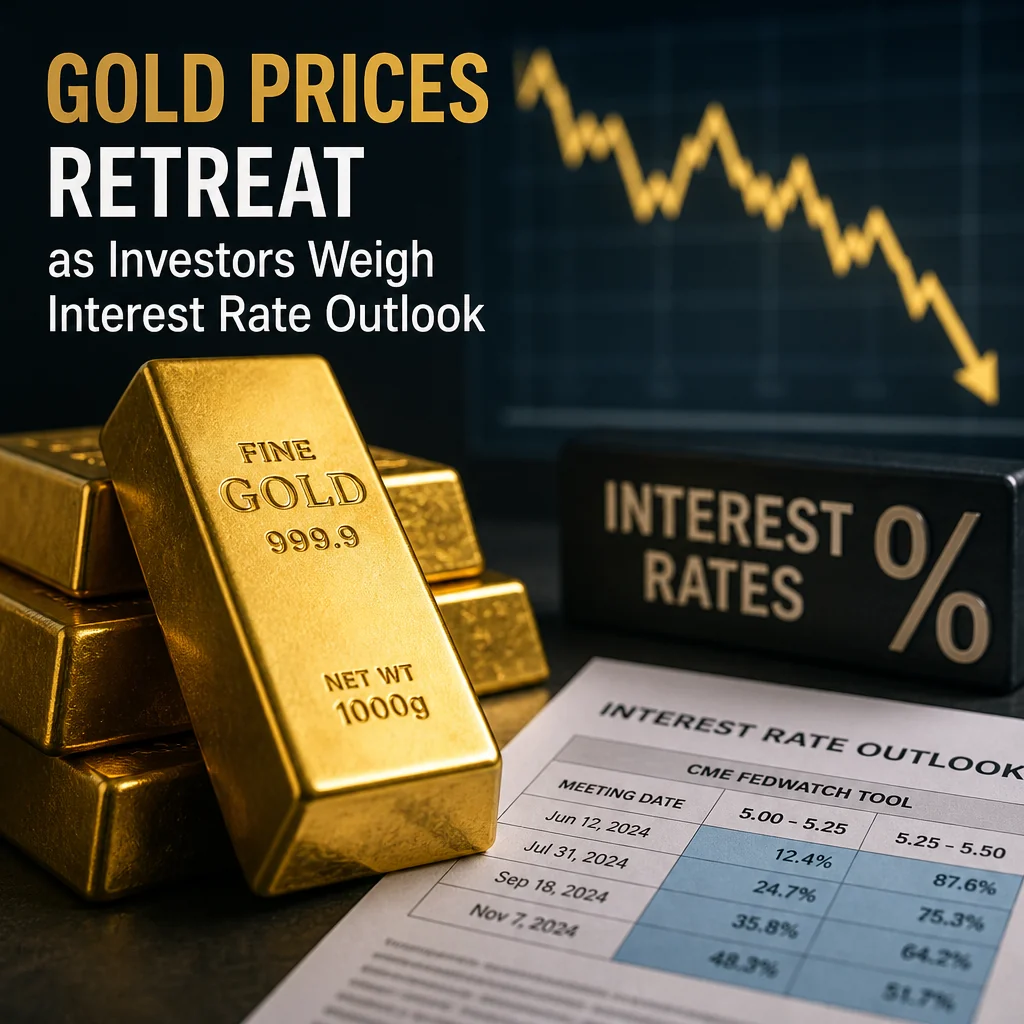
Gold prices pulled back as investors reassessed the path of global interest rates and the timing of potential monetary-policy easing. The retreat in bullion reflects a shift in market positioning rather than a fundamental collapse in demand: traders are weighing whether inflation will cool quickly enough to allow major central banks, particularly the US Federal Reserve, to reduce borrowing costs without reigniting price pressures.
Spot gold, quoted as XAU/USD, weakened as profit-taking and a firmer US dollar reduced the metal’s immediate appeal. Because gold is priced internationally in dollars and does not generate interest income, it tends to face pressure when Treasury yields rise or expectations for rate cuts are pushed further into the future. Conversely, any deterioration in economic data, a decline in yields or renewed geopolitical stress could quickly restore buying interest.
The latest move leaves bullion markets caught between two competing forces. Higher-for-longer interest rates are a near-term headwind, while official-sector purchases, geopolitical uncertainty and demand for portfolio diversification continue to provide structural support. That tension is likely to keep gold volatile even if its longer-term investment case remains intact.
Key Catalysts and Drivers
Interest-rate expectations remain central
The Federal Reserve’s policy outlook is the most important short-term influence on gold. Investors have been closely examining inflation, employment and economic-growth data to determine whether the US central bank can begin lowering rates or must retain a restrictive stance for longer.
When markets anticipate delayed rate cuts, yields on government bonds generally rise or remain elevated. That increases the opportunity cost of holding bullion, since investors can obtain a more attractive return from cash and fixed-income instruments. Gold may therefore retreat even when underlying physical demand remains firm.
However, rate expectations can change rapidly. A weaker-than-expected employment report, softer inflation reading or signs of slowing consumer activity could revive expectations of monetary easing. Such a development would likely pressure the dollar and bond yields while supporting XAU/USD. Traders are consequently focused not only on current policy decisions but also on the language used by central-bank officials and the trajectory implied by forward guidance.
The US dollar adds to pressure
Movements in the US Dollar Index have also influenced bullion’s direction. A stronger dollar makes gold more expensive for buyers using other currencies, potentially reducing demand in international markets. It can also encourage investors to hold dollar-denominated assets rather than precious metals.
The relationship is not absolute. Gold can rise alongside the dollar during periods of acute financial or geopolitical stress because both assets are viewed as defensive holdings. Nevertheless, in a market primarily driven by interest-rate expectations, dollar strength often amplifies downward pressure on bullion.
Profit-taking after previous gains
Gold’s retreat also reflects normal market consolidation. After a sustained advance, short-term traders may lock in gains, particularly when prices approach technically significant resistance levels. Such selling can produce a sharper decline than underlying fundamentals alone would suggest.
Technical investors are monitoring whether the pullback remains orderly or develops into a broader trend reversal. A stabilization above recent support levels would indicate that buyers remain willing to accumulate on weakness. A sustained break below those levels, accompanied by rising yields and a stronger dollar, could signal additional near-term downside.
Central-bank demand remains a structural support
Official-sector buying continues to distinguish the current gold market from many previous cycles. Central banks have been increasing bullion reserves as part of efforts to diversify foreign-exchange holdings, reduce concentration risk and strengthen balance sheets amid geopolitical and financial uncertainty.
This demand is less sensitive to daily changes in US yields than speculative investment flows. It can therefore provide a cushion during periods of price weakness. Nonetheless, central-bank purchases do not prevent short-term corrections, and the pace of official buying can vary from one reporting period to another.
Geopolitical and economic risks remain in the background
Conflicts, trade tensions, sovereign-debt concerns and uncertainty over the global growth outlook continue to support gold’s safe-haven role. Any escalation in geopolitical risk could encourage investors to increase exposure to bullion, while signs of de-escalation may reduce the urgency of defensive buying.
Gold is also sensitive to concerns about fiscal sustainability and financial-market stability. If investors become worried about public debt, banking-sector stress or disorderly currency movements, demand for a non-yielding reserve asset may rise even if interest rates remain elevated.
Regional Impact and Kuwait Market Outlook
For investors and consumers in Kuwait, international gold prices are the primary reference point for local bullion and jewelry rates. Because the Kuwaiti dinar is managed against a basket of currencies with a substantial dollar component, local gold prices generally track movements in XAU/USD closely, although the pass-through is not always immediate or exact.
A decline in global spot gold typically lowers wholesale prices in Kuwait, but retail rates may adjust with a delay. Dealers must account for inventory acquired at earlier prices, currency conversion, fabrication costs, shipping, insurance and operating margins. Jewelry prices also include workmanship charges, which can remain unchanged even when the metal component becomes cheaper.
How different karats respond
24-karat gold: This is the closest retail expression of international bullion prices because it contains the highest proportion of pure gold. Investors purchasing bars, coins or high-purity jewelry will usually see the clearest response to movements in XAU/USD. Premiums over the metal value, however, can widen during periods of strong demand or limited supply.
22-karat gold: Commonly used in jewelry across the Gulf, 22K gold contains a smaller proportion of pure bullion than 24K. Its retail price is influenced by the international market but also by design, workmanship and dealer margins. Consumers should distinguish the quoted price per gram from the final invoice, which may include making charges and taxes where applicable.
21-karat gold: This grade is widely traded in regional jewelry markets and generally moves in the same direction as 24K gold, though at a lower metal value per gram. It can be suitable for buyers seeking a balance between durability and gold content, but it is less efficient than investment-grade bullion for pure wealth preservation because workmanship and resale spreads may be significant.
Practical considerations for Kuwait and Gulf buyers
A short-term retreat may create better entry points for buyers who are building positions gradually, but it does not guarantee that prices have reached a lasting low. Physical purchasers should avoid basing decisions solely on one day’s movement. Instead, they should compare dealer premiums, verify purity, request an invoice showing weight and karat, and understand the buyback terms before completing a transaction.
For wealth preservation, bullion bars and widely recognized coins generally offer lower fabrication costs and clearer pricing than ornamental jewelry. Jewelry remains valuable for personal use and cultural reasons, but its resale value may not reflect the original purchase price because making charges are often not recovered.
Gulf investors should also account for currency and liquidity considerations. Gold can diversify a portfolio, but it does not pay interest or dividends, and physical holdings require secure storage. A disciplined accumulation plan—buying smaller amounts at regular intervals rather than attempting to identify the exact market bottom—can reduce the risk of concentrating purchases at an unfavorable price.
Key Takeaways for Investors
- Watch US yields and Fed expectations: Rising bond yields and delayed rate-cut forecasts are generally negative for gold, while falling yields can revive demand.
- Track the dollar as a key short-term signal: Dollar strength can weigh on XAU/USD, although safe-haven flows may override the usual relationship during major shocks.
- Use pullbacks strategically: Investors with a long-term allocation objective may consider staged purchases rather than committing all capital after a sharp decline.
- Prioritize low-premium products: For investment purposes, high-purity bars and recognized coins usually provide more transparent exposure than heavily crafted jewelry.
- Separate investment value from retail costs: Making charges, dealer spreads, storage and resale conditions can materially affect the return on physical gold.
Expert Conclusion
Gold’s retreat is best understood as a repricing of interest-rate expectations and a period of consolidation after strong market interest, rather than evidence that the metal’s broader investment case has disappeared. The immediate outlook will depend heavily on whether upcoming US economic data confirms persistent inflation or points to a meaningful slowdown that could give the Federal Reserve room to ease policy.
Precious-metals traders should monitor the US Dollar Index, Treasury yields, central-bank commentary, futures positioning and technical support levels. They should also remain alert to geopolitical developments that could generate sudden safe-haven demand. For private wealth holders in Kuwait and across the Gulf, the most resilient approach is likely to combine measured accumulation, careful attention to premiums and a clear distinction between jewelry purchases and investment bullion.
Near-term volatility is likely to remain elevated while markets debate the timing and scale of future rate cuts. A durable recovery in gold would be strengthened by lower real yields, a softer dollar and continued official-sector demand. Conversely, a prolonged period of restrictive policy and firm economic data could keep prices under pressure. In either case, disciplined position sizing and a long-term view remain more reliable than attempts to predict every daily movement.