

Kuwaiti Heritage & Bridal Jewellery
Khasah Gold Heirloom: A Treasure of Gulf Heritage | Sultan Gold
مواطن
The khasah gold heirloom brings together Kuwaiti family history, skilled goldwork, and lasting material value. Families treasure it as more than an ornament or financial asset. Instead, it connects generations through weddings, celebrations, and personal stories. At Sultan Gold, we value these pieces for their craftsmanship and their place within Gulf heritage.
Cultural Meaning of the Khasah Gold Heirloom
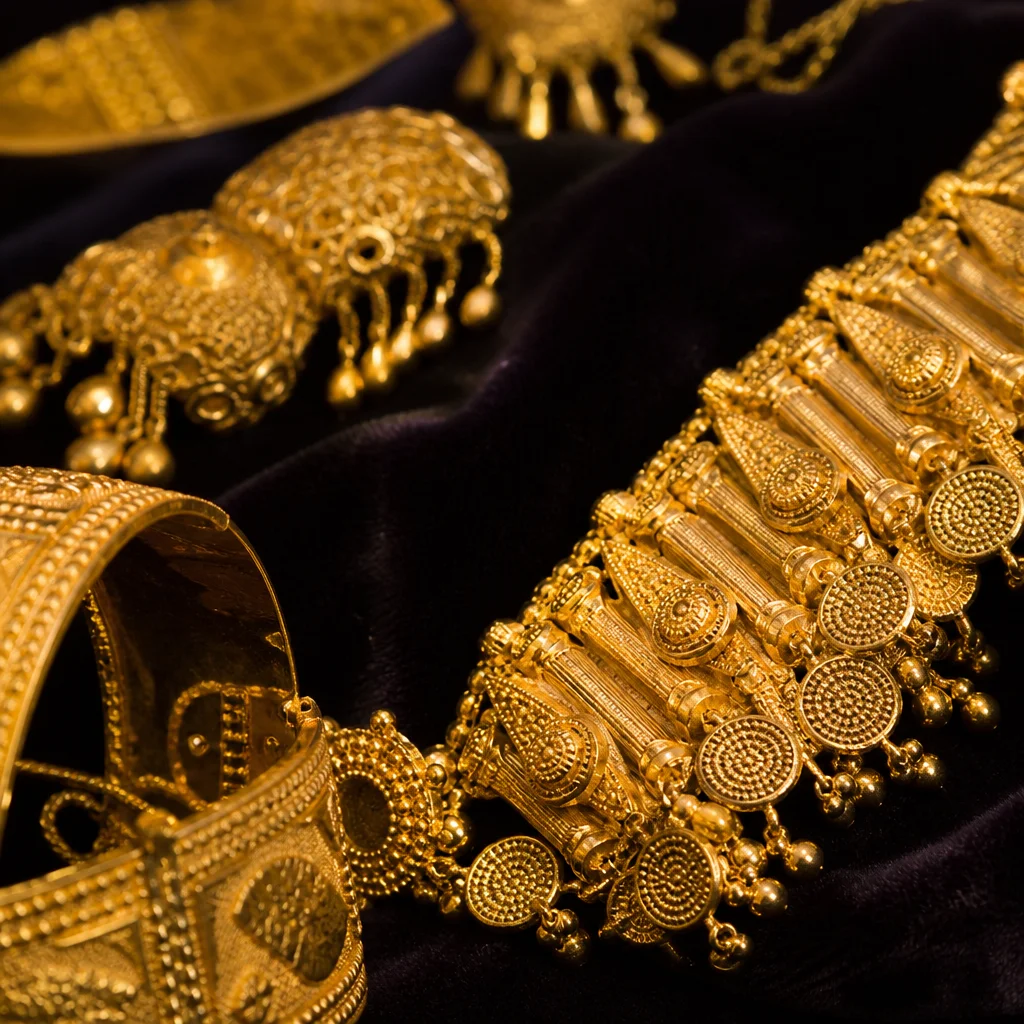
Traditionally, Kuwaiti families associate the Khasah with bridal identity, family continuity, and important social occasions. A mother may pass the piece to her daughter or another close relative. As a result, each transfer adds a new chapter to its history.
The heirloom also preserves memories that a modern purchase cannot easily recreate. For example, families may remember who wore it, when she received it, and which celebrations featured it. These details give the jewelry an emotional value beyond its gold content.
Moreover, the Khasah reflects the design language of Kuwait and the wider Gulf. Artisans use detailed patterns and careful construction to create a distinctive ceremonial appearance. Readers can explore this background in our guide to Kuwaiti bridal heritage and Khasah craftsmanship.
Khasah Gold Heirloom: Market Catalysts and Gold Value
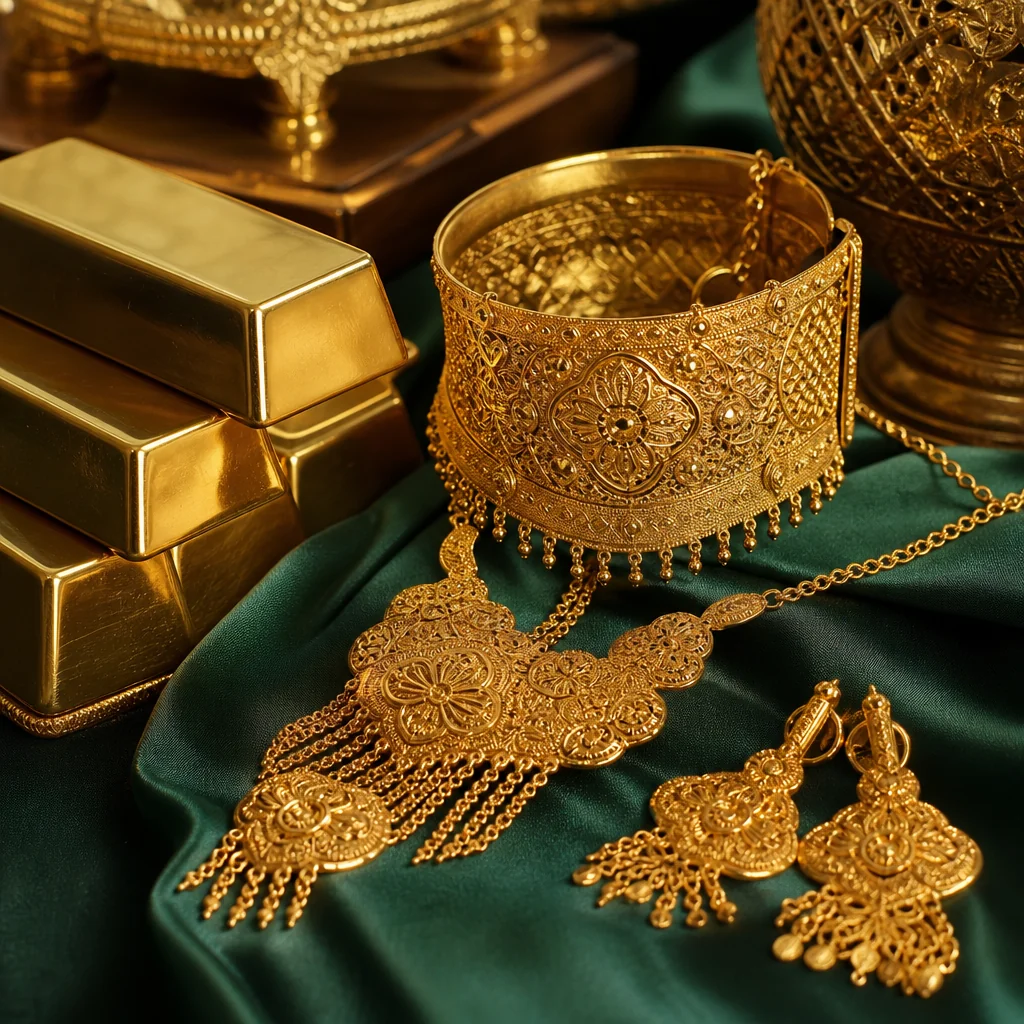
The appeal of the khasah gold heirloom also relates to the precious metals market. Many buyers view gold as a tangible store of value during uncertain conditions. However, market prices can rise or fall, so buyers should avoid assuming guaranteed returns.
Several forces influence gold prices in Kuwait and the wider GCC. These include international demand, geopolitical events, interest rates, and movements in major currencies. In addition, the relationship between the Kuwaiti dinar and global markets affects local price comparisons.
Still, the market value of a heritage piece involves more than its weight. Purity and current gold prices provide a starting point. Craftsmanship, age, condition, rarity, and documented history may also shape buyer interest. Therefore, families should distinguish the piece’s metal value from its cultural and artistic importance.
Demand for heritage jewelry can also change with fashion and collector preferences. Meanwhile, well-preserved family pieces may attract interest because they combine recognizable traditions with personal provenance. This combination helps explain why passed-down jewelry remains important in Kuwait.
Khasah Gold Heirloom: Why Kuwaiti Families Preserve the Khasah
A family heirloom offers continuity during periods of rapid social change. Although lifestyles evolve, the jewelry provides a physical connection to earlier generations. It can also help younger relatives learn about family customs and Kuwaiti bridal traditions.
Furthermore, passing down an heirloom can carry responsibilities as well as privileges. The next custodian must protect the piece and preserve its story. Clear records can help, especially when several relatives share an interest in the jewelry.
Families may record the owner’s name, approximate acquisition date, and important occasions linked to the piece. They can also retain receipts, appraisals, repair records, and photographs. Consequently, future generations receive both the jewelry and the knowledge that gives it context.
The tradition does not require every family to treat a Khasah as an investment. Above all, its meaning comes from identity, memory, and craftsmanship. Financial value remains relevant, but it should support rather than replace the heirloom’s cultural role.
سوق الذهب الكويتي الاستشاري
Local buyers should examine a Khasah carefully before making a purchase. First, ask the seller about gold purity, weight, construction, and any previous repairs. Next, request clear documentation and an itemized receipt. Buyers can also review current consumer and commercial information from the Kuwait Ministry of Commerce and Industry.
In addition, buyers should compare the quoted price with the current local gold rate. This step helps separate the underlying metal cost from design and workmanship charges. Nevertheless, a heritage piece may command a premium because artisans need time and specialist skill to produce it.
Condition also deserves close attention. Clasps, links, decorative elements, and connection points can weaken through wear. Therefore, an experienced jeweler should inspect the piece before frequent use. A careful inspection can identify repairs without altering the original character.
Protecting a Family Heirloom
Proper care helps a Khasah retain its beauty and structural integrity. Store it in a dry, secure place away from abrasive jewelry. Soft, separate packaging can reduce scratches and prevent delicate sections from catching on other items.
Also, avoid harsh household chemicals and aggressive cleaning methods. Instead, seek professional advice that suits the piece’s purity, age, and construction. If repairs become necessary, choose a craftsperson who understands traditional Gulf jewelry.
Insurance or a professional valuation may also help families manage financial risk. However, an appraisal should describe the piece accurately rather than relying only on gold weight. Photographs and ownership records can further support identification after loss or damage.
Strategic Recommendations
- Monitor gold prices: Follow local and global trends before buying or valuing a piece. Price movements can create opportunities, but they can also increase short-term costs.
- Confirm authenticity: Ask a reputable jeweler to explain purity marks, weight, workmanship, and supporting documents.
- Preserve provenance: Keep receipts, appraisals, photographs, and written family history together in a secure location.
- Plan for succession: Discuss who will care for the heirloom next. Clear family communication can prevent confusion and protect its story.
- Balance enjoyment and care: Wear the piece on meaningful occasions while following suitable handling and storage practices.
In conclusion, the khasah gold heirloom unites tradition, artistry, and tangible value. Its gold content matters, yet its family history often matters more. With careful documentation and responsible care, the piece can continue connecting Kuwaiti generations for years to come.
Disclaimer: This publication provides educational and market information only. It does not constitute formal financial, legal, or investment advice.