



Gold Market News & Live Analysis
Vietnam Gold Prices Update: SJC & 9999 Rates
Oct
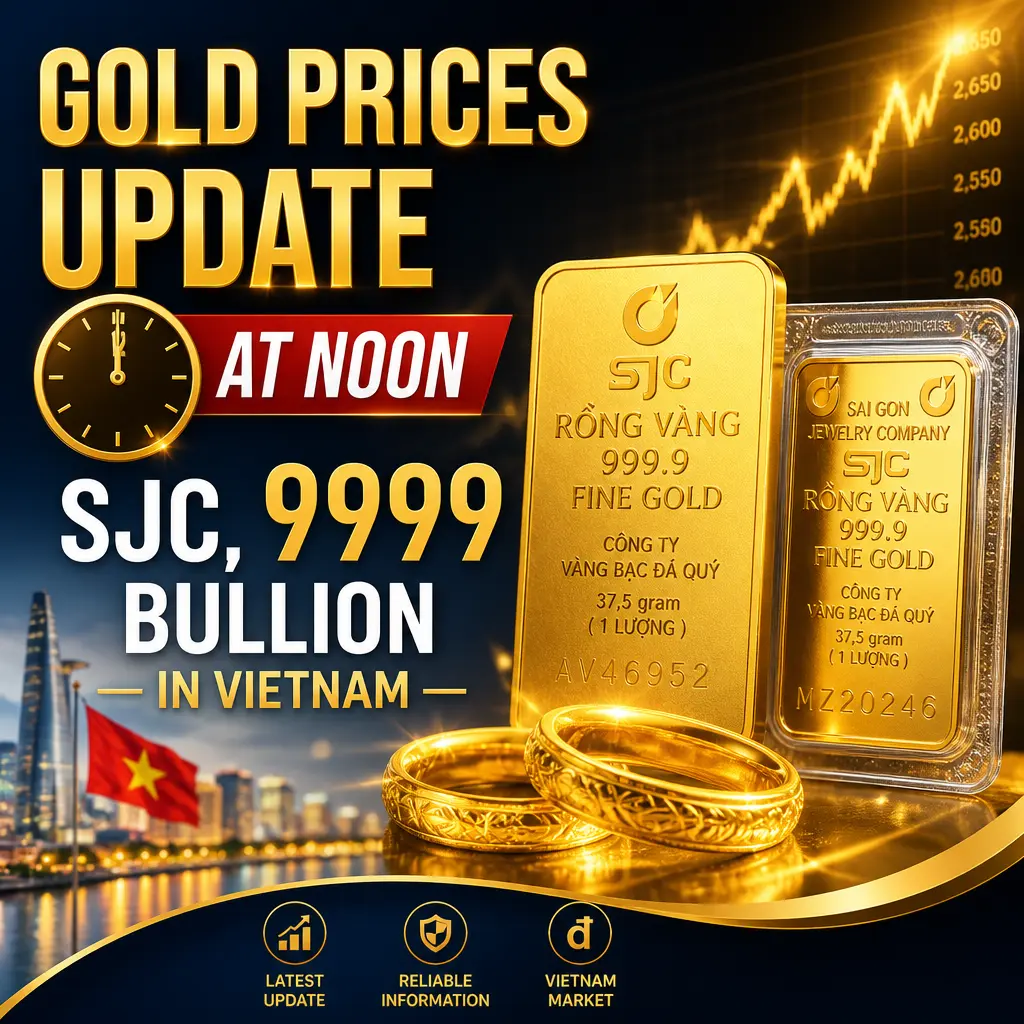
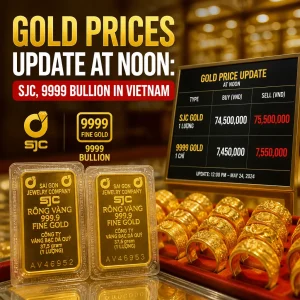
This Vietnam gold prices update covers noon prices for SJC bullion and plain 9999 gold in Vietnam on Thursday, October 15, 2026. Investors tracked DOJI, Bao Tin Minh Chau and Phu Quy quotations. In addition, they watched spot gold, the US dollar and Federal Reserve policy expectations. For broader market context, see this Vietnam gold price report.
Local prices do not always follow XAU/USD in a straight line. Instead, dealers also factor in the Vietnamese dong, premiums, supply, taxes and the buying-selling spread. Therefore, a small overseas move can create a larger or smaller local change.
At midday, investors focused on price direction and spread size. Meanwhile, they compared SJC bars with the international value of gold. A wider premium can signal tight supply or strong demand. Conversely, a narrower premium may point to better liquidity or weaker speculation.
Vietnam Gold Prices Update: Key Market Drivers
Vietnam Gold Prices Update: Federal Reserve expectations
The Federal Reserve remains a major influence on gold. For example, expected rate cuts often support bullion. Lower yields reduce the opportunity cost of holding an asset that does not pay interest.
However, restrictive policy can pressure gold. Higher bond yields and cash returns may attract funds away from bullion. Markets often move before the Federal Reserve changes rates.
In addition, inflation, employment, retail sales and official comments can shift rate expectations quickly. Easing inflation may support gold if economic growth remains stable. Persistent inflation may delay rate cuts, strengthen the dollar and weigh on spot bullion.
Vietnam Gold Prices Update: The US dollar and Treasury yields
Gold trades mainly in US dollars. As a result, a stronger dollar makes bullion more expensive for buyers using other currencies. A weaker dollar can improve affordability and support demand.
For Vietnamese investors, the dong-dollar exchange rate adds another layer. In particular, a weaker dong can amplify the local impact of a global gold rise.
Real Treasury yields also matter. Rising real yields can reduce demand for gold. On the other hand, falling yields may encourage investors to seek protection from inflation, currency weakness and financial uncertainty.
Central-bank purchases
Central-bank buying remains a durable source of support. Authorities in emerging economies use gold to diversify reserves and reduce currency concentration. They also seek protection from financial and geopolitical risks.
Furthermore, official-sector demand often changes more slowly than exchange-traded-fund flows or futures positions. Consequently, it can support prices during temporary corrections.
Geopolitical and financial risks
Gold also benefits from safe-haven demand. Conflict, sanctions, trade restrictions and political instability can increase interest in bullion.
However, investors should assess headlines alongside market positioning. Large speculative positions can limit a rally. At the same time, strong physical demand may limit a decline.
Vietnam’s SJC and 9999 Gold Market
SJC bullion holds a distinctive position in Vietnam. Regulation and approved supply channels can push its price away from the international gold equivalent.
Meanwhile, plain 9999 products from DOJI, Bao Tin Minh Chau and Phu Quy may track global prices more closely. Each dealer still applies its own inventory, customer flows and product premium.
Investors should compare the selling price with the buyback price. The difference is the spread and represents an immediate transaction cost. Therefore, a wider spread means gold must rise further before the buyer breaks even.
In addition, buyers should verify weight, serial numbers, invoices and buyback terms. Recognized products with clear documents are usually easier to resell. Ultimately, the goal is to preserve liquidity as well as value.
Readers can also review the Sultan Gold homepage for additional gold-market information.
Regional Impact and Kuwait Market Outlook
Investors and jewelry buyers in Kuwait and the Gulf may watch Vietnam’s update as a sign of Asian physical-market sentiment. Nevertheless, Vietnamese quotations do not set Gulf retail prices.
Kuwait prices mainly reflect international spot gold, the US dollar, dealer premiums and jewelry-making costs. Generally, twenty-four-karat bullion responds most directly to XAU/USD.
Global price changes reach Kuwaiti dinar quotations through the dollar relationship. However, local dealers may still adjust at different speeds during volatile sessions.
Jewelry buyers must separate metal value from workmanship. For instance, twenty-two-karat and 21-karat jewelry contain less pure gold than 24-karat bullion. Making charges, design premiums and retailer margins also raise the final price.
Resale value usually reflects metal content more closely than the original workmanship charge. Therefore, gradual purchases can reduce timing risk. Buying in stages may prove more practical than trying to find the exact market bottom.
Key Takeaways for Investors
- Track global benchmarks: Watch XAU/USD, real Treasury yields and the Dollar Index.
- Account for local premiums: Regulation, supply and demand can lift SJC prices above international value.
- Compare transaction costs: Review both selling and buyback prices.
- Consider staged buying: Several purchase dates can reduce single-entry risk.
- Protect liquidity: Choose established products with clear documents and buyback policies.
Expert Conclusion
The noon update shows how global forces shape local gold prices. SJC and plain 9999 quotations respond to international bullion, the dong exchange rate, local premiums, inventory and investor sentiment.
Similarly, the same principle applies in Kuwait and across the Gulf. Twenty-four-karat bullion usually follows global prices. Meanwhile, twenty-two-karat and 21-karat jewelry also carries fabrication and retail costs.
Traders should monitor Federal Reserve communication, inflation, employment data, Treasury yields and the dollar. They should also watch central-bank demand and local premiums.
As a result, softer real yields, a weaker dollar and steady official buying could support a sustained advance. Conversely, higher yields or a stronger dollar could trigger a correction.
For private wealth holders, gold works best as a diversification and purchasing-power tool. Ultimately, disciplined sizing, careful product selection and attention to spreads matter more than reacting to every intraday move.